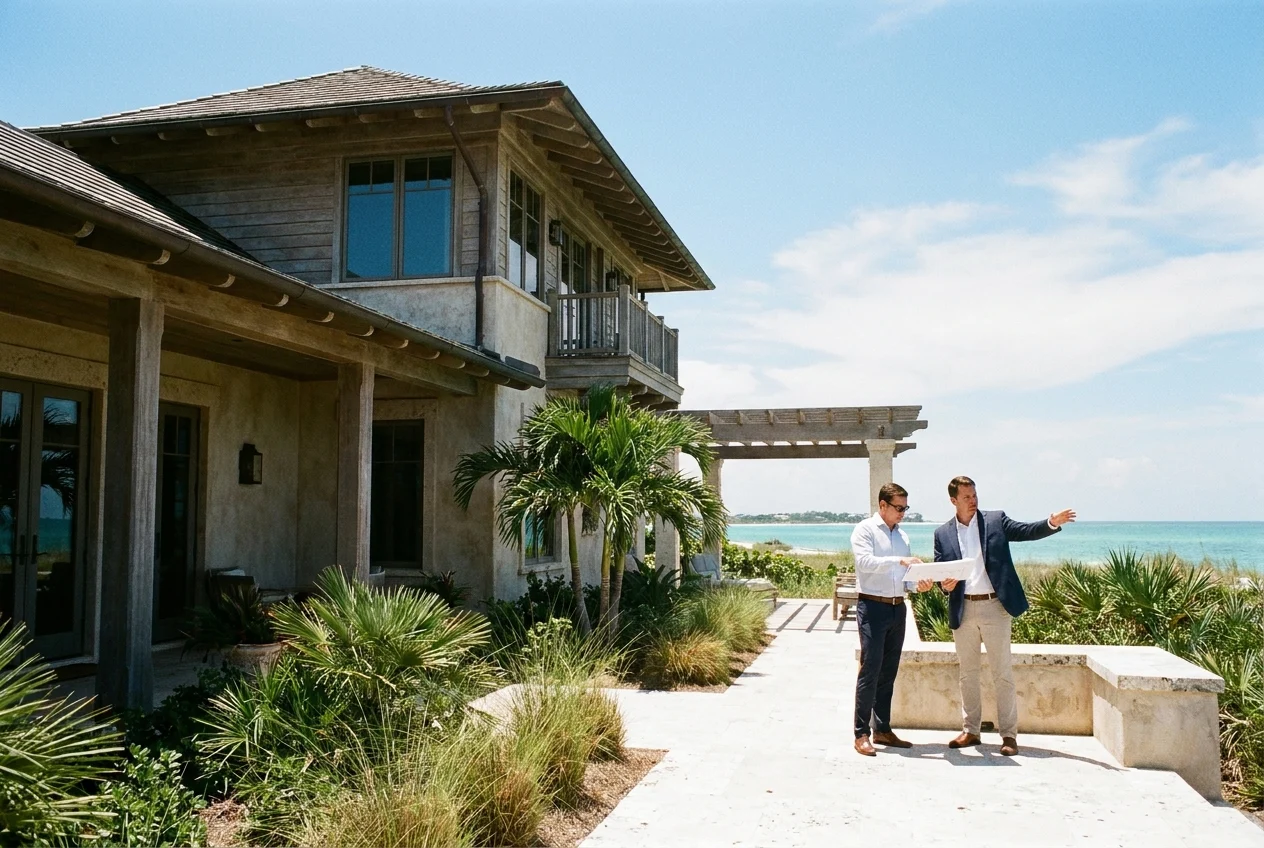
Boca Grande’s beauty comes with a demanding coastal environment. Homes on Gasparilla Island face intense UV exposure, salt-laden air, high humidity, wind-driven rain, and seasonal storm threats, all of which influence how a durable coastal residence should be planned, built, and maintained.
Strong coastal home design is not only about protecting the structure during extreme weather. It is also about choosing materials, assemblies, and details that can withstand daily exposure while preserving comfort, curb appeal, and long-term value.
Understanding the Coastal Conditions That Shape Design Choices
Before selecting finishes or architectural features, it is important to understand how Boca Grande’s coastal setting affects a home over time. Salt air accelerates corrosion on metals, breaks down certain coatings, and can shorten the lifespan of hardware, railings, fasteners, and mechanical components if they are not specified correctly.
Sun exposure is another major factor in coastal home durability. Prolonged UV radiation can fade exterior colors, dry out sealants, weaken plastics, and cause some wood products to crack or warp.
Storm conditions add another layer of complexity. Wind pressure, wind-borne debris, heavy rainfall, and possible storm surge all influence the design of the roof, windows, doors, foundation, drainage, and exterior envelope.
Why Small Details Matter in a Harsh Marine Climate
In coastal construction, small details often determine how well a home performs. The wrong fastener can stain a facade, a poorly sealed penetration can allow moisture into the wall assembly, and inadequate roof edge detailing can become a weak point during high winds.
These details are especially important because coastal wear is cumulative. A component may look fine after the first season, but repeated exposure to salt, moisture, heat, and storms can gradually reveal weaknesses.
Choosing Exterior Materials Built for Salt Air and Sun
Material selection is one of the most important decisions in coastal home design. In Boca Grande, exterior products should be evaluated not only for appearance, but also for resistance to corrosion, UV degradation, moisture intrusion, and impact from wind-driven debris.
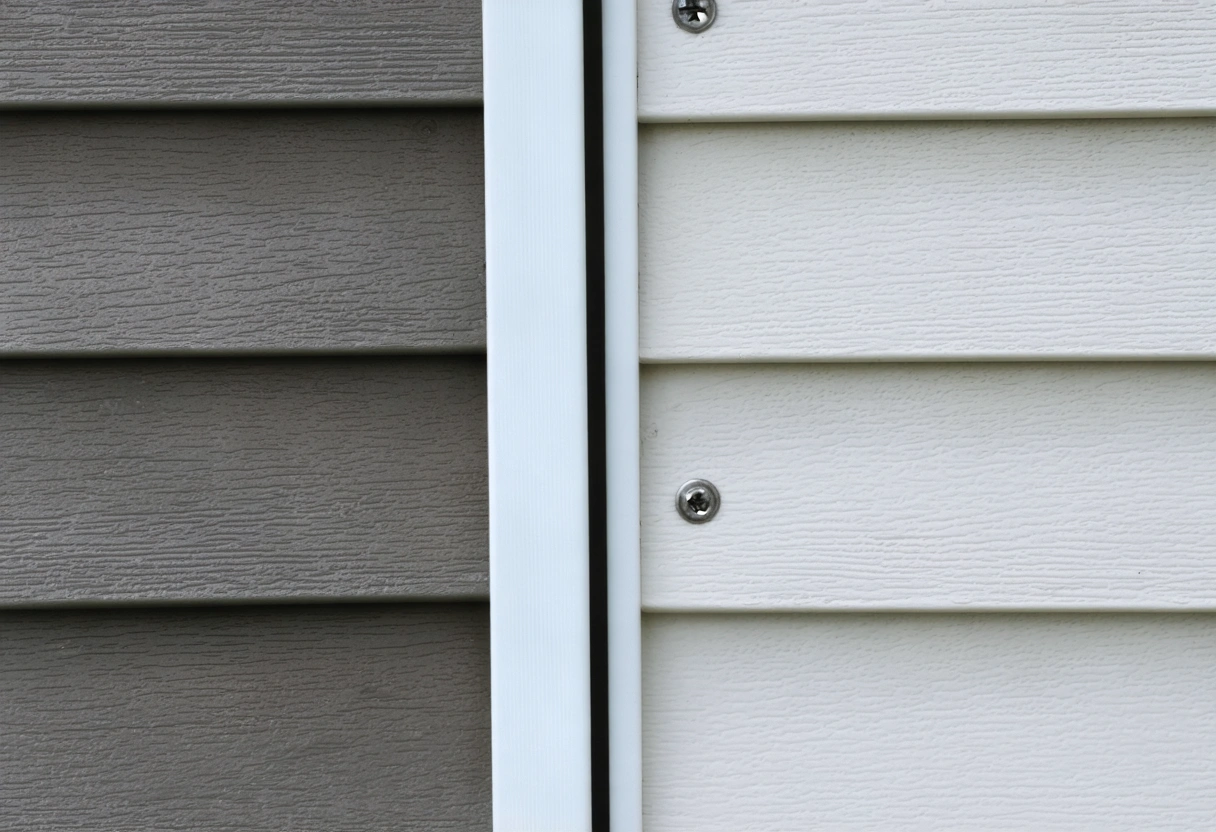
Fiber cement siding, high-quality stucco systems, natural stone, concrete, and certain composite materials are commonly considered for coastal applications because they can offer strong durability when installed correctly.
Metals, Fasteners, and Hardware
Metal components require special attention near the coast. Stainless steel, hot-dip galvanized steel, marine-grade aluminum, and properly coated metals may perform better than standard materials, but compatibility matters.
Fasteners should be selected with the same care as visible finishes. Screws, nails, anchors, hinges, brackets, and connectors are small parts of the home, but they play a major role in structural performance and exterior longevity.
Paints, Coatings, and Sealants
Exterior coatings in Boca Grande must withstand intense sunlight, salt spray, and frequent moisture. Premium exterior paints and elastomeric coatings can help protect surfaces, but proper surface preparation is essential for long-lasting results.
Sealants should be chosen for flexibility, UV resistance, and compatibility with the materials they contact. Around windows, doors, trim, roof penetrations, and transitions between materials, high-quality sealants help control water intrusion and reduce maintenance issues over time.
Designing Roof Systems for Wind, Rain, and Heat
The roof is one of the most exposed parts of any Boca Grande home. It must handle intense sunlight, sudden downpours, uplift forces during storms, and constant expansion and contraction from heat.
In coastal areas, roof shape can influence storm performance. Hip roofs are often favored because they can reduce wind pressure compared with certain gable configurations.
Roofing Materials for Coastal Homes
Metal roofing, concrete tile, clay tile, and high-performance asphalt shingles can all be considered depending on the home’s design, budget, and structural requirements. In a salt-air environment, metal roofing should be specified with appropriate coatings and compatible fasteners to reduce corrosion risk.
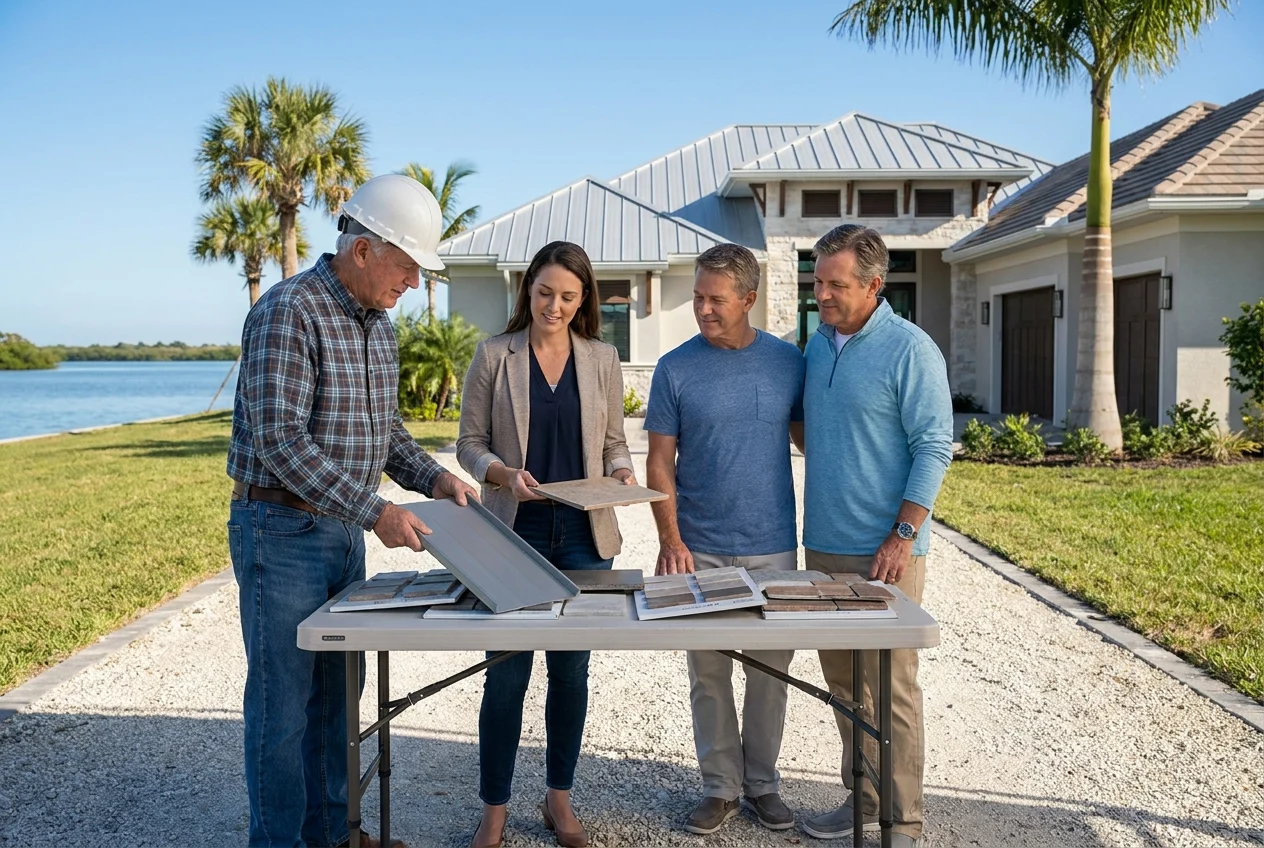
The roofing material itself is only part of the system. A high-quality, self-adhered underlayment can provide an important secondary water barrier if wind-driven rain gets beneath the primary roof covering.
Managing Heat Through Roof Color and Ventilation
Roof color and attic ventilation can have a noticeable effect on comfort and energy performance. Lighter roof colors or reflective roof finishes can reduce heat absorption, which may help lower cooling demand during long stretches of hot weather.
For homes with conditioned attic assemblies or spray foam insulation at the roof deck, the ventilation strategy must be planned differently. These assemblies can work well in coastal climates, but they require careful coordination among the architect, builder, insulation contractor, and mechanical designer to manage moisture and maintain indoor air quality.
Specifying Impact-Resistant Windows and Exterior Doors
Windows and doors are critical components of the coastal building envelope. They affect storm resistance, energy efficiency, natural light, views, ventilation, and daily comfort. In Boca Grande, they should be selected for wind pressure ratings, impact resistance, water infiltration resistance, frame durability, and hardware quality.
Impact-resistant glass can help protect the home from wind-borne debris while also improving security and reducing the need for temporary storm shutters. These systems typically include laminated glass, reinforced frames, and tested installation methods.
Frame Materials and Coastal Performance
Aluminum, fiberglass, vinyl, wood-clad, and composite frames each have different strengths and maintenance needs. Aluminum frames are common in coastal construction, especially when thermally improved and properly coated, but hardware and finishes must be suited to salt exposure.
Regardless of frame material, installation is essential. Even a high-performance window can fail if the flashing, sealants, sill pan, or drainage path is poorly detailed.
Doors, Sliders, and Large Openings
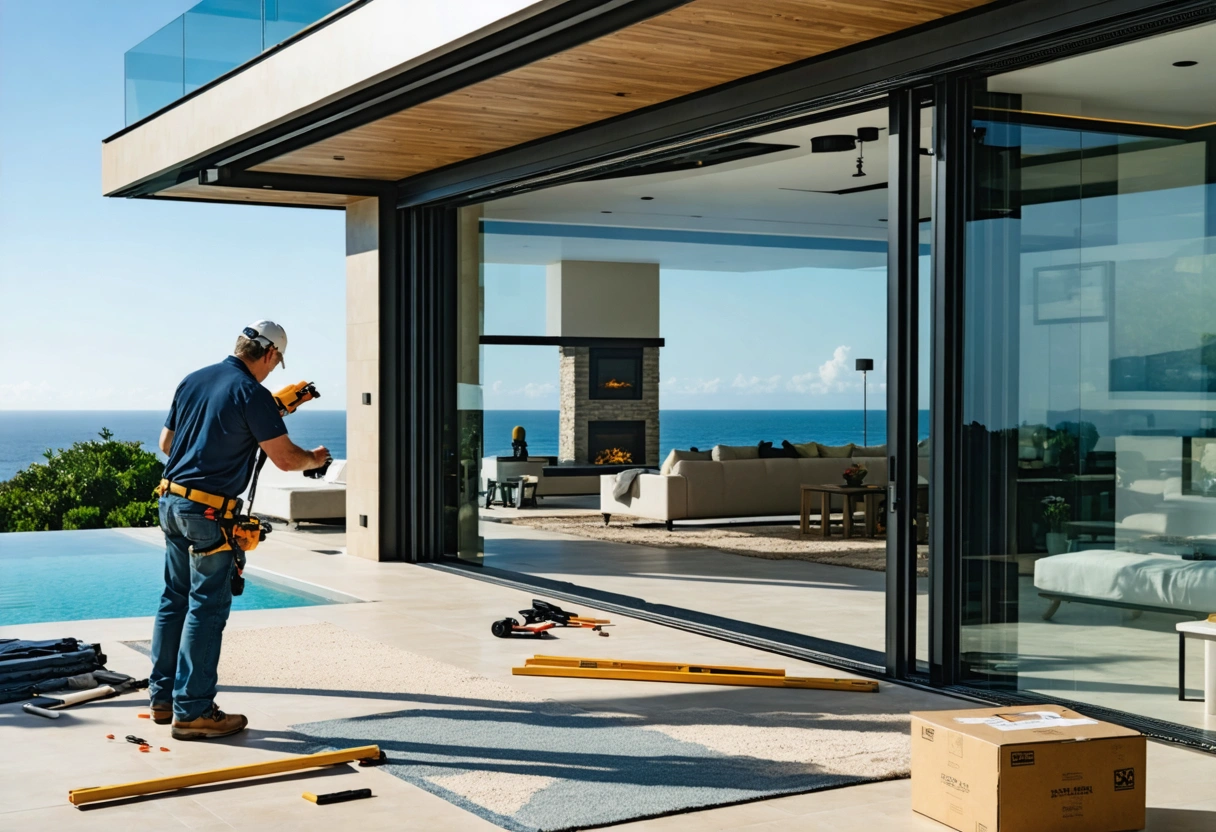
Coastal homes often feature large sliding glass doors, folding doors, or multi-panel openings to connect indoor living areas with terraces, pools, and waterfront views. These features can be beautiful, but they require careful product selection because large openings experience significant wind and water loads.
Tracks, rollers, locks, thresholds, and drainage channels should be selected for marine exposure and maintained regularly. Low-profile thresholds may improve accessibility and appearance, but they must still be designed to resist wind-driven rain.
Elevating the Home and Planning for Flood Resilience
Flood resilience is a central consideration for many Boca Grande homes. Depending on the property’s location and elevation, design may need to account for storm surge, tidal flooding, heavy rainfall, and changing floodplain requirements.
Foundation design should be based on site conditions, applicable codes, flood zone requirements, soil characteristics, and the overall structure of the home. Pile foundations, elevated slabs, breakaway walls, and flood openings may be part of the strategy in vulnerable areas.
Designing Ground-Level Areas Carefully
In elevated coastal homes, the ground level is often used for parking, storage, access, and utility spaces. These areas should be designed with flood exposure in mind.
Finished living areas, valuable storage, and sensitive mechanical equipment should generally be kept above flood-prone elevations. If enclosed areas are included below the main living level, they must be designed to comply with flood regulations and to reduce pressure on the structure during flood events.
Protecting Utilities and Mechanical Systems
Air conditioning equipment, electrical panels, generators, pool equipment, water heaters, and plumbing components are often vulnerable during flooding and storms. Elevating or relocating these systems can reduce the risk of costly damage and shorten recovery time after severe weather.
Mechanical systems also need protection from salt air. Outdoor units should be selected with coastal-rated coatings when appropriate, installed with adequate clearance, and maintained to remove salt buildup.
Managing Moisture With a Durable Building Envelope
Moisture management is one of the most important principles in coastal home durability. Boca Grande homes are exposed to rain, humidity, condensation, and salt-laden air, so walls, roofs, windows, doors, and foundations must work together to shed water, dry effectively, and limit vapor-related problems.
A resilient building envelope uses layers of protection. Exterior cladding is the first line of defense, but it should not be treated as the only barrier.
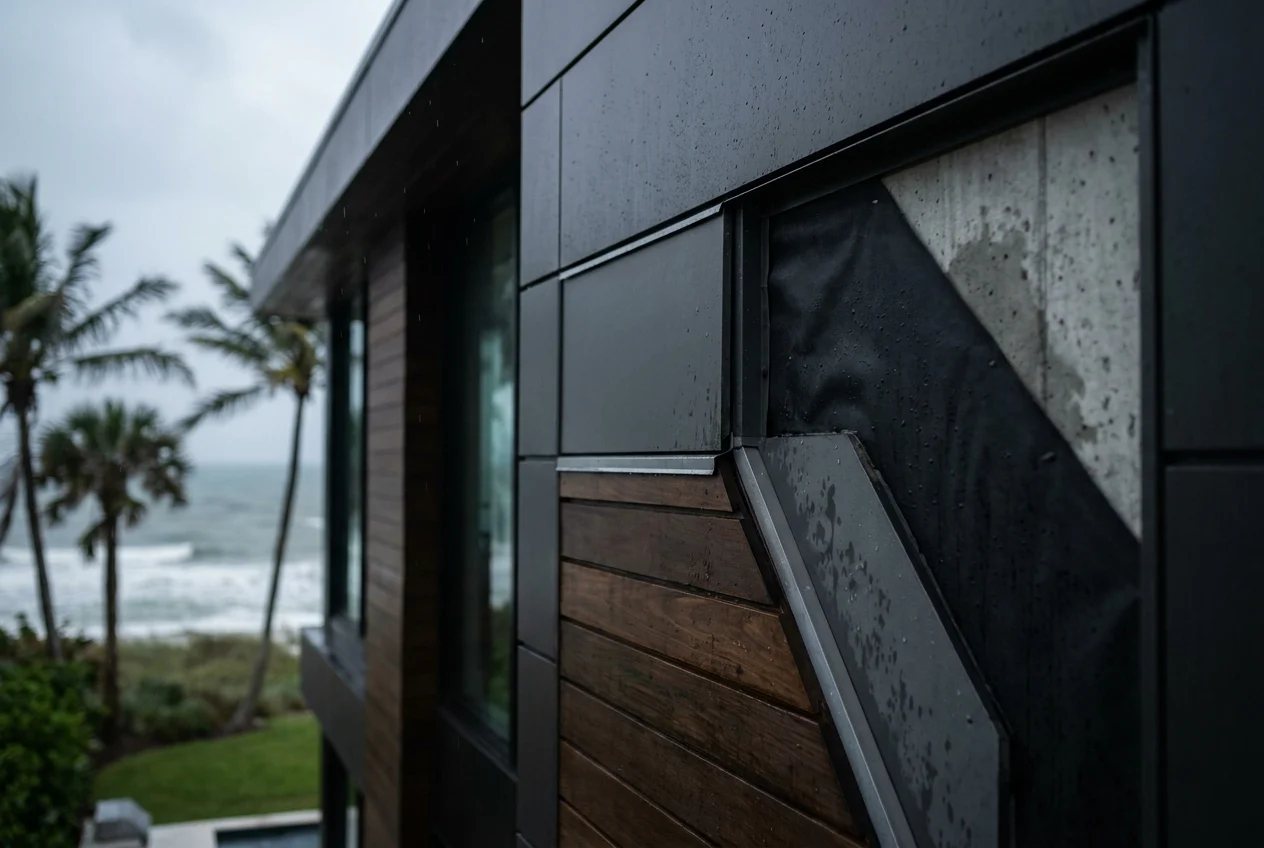
Drainage Planes and Rainscreen Details
A rainscreen assembly creates a small drainage and ventilation space behind the exterior cladding. This space allows trapped moisture to drain and promotes drying, which can be especially valuable in humid coastal climates.
Even small drainage gaps can improve durability when paired with correct flashing at the base of walls, around openings, and at material transitions. The goal is to assume some water will get behind the cladding and then give that water a controlled path back out.
Controlling Indoor Humidity
Coastal homes must also manage moisture from the inside. High indoor humidity can contribute to condensation, musty odors, mold growth, and damage to finishes. Properly sized air conditioning, dedicated dehumidification, balanced ventilation, and careful air sealing can help maintain comfort and protect building materials.
Oversized air conditioning systems can cool the home quickly without running long enough to remove humidity effectively. A thoughtful mechanical design should consider occupancy, window area, insulation levels, air leakage, and the realities of a hot, humid coastal climate.
Creating Outdoor Living Areas That Withstand Exposure
Outdoor living is a major part of Boca Grande home design. Porches, balconies, decks, pool terraces, outdoor kitchens, and lanais should be designed with the same durability mindset as the main structure.
Decking, Railings, and Porch Materials
Composite decking, dense tropical hardwoods, concrete pavers, porcelain tile, and properly detailed concrete surfaces are often considered for coastal outdoor spaces. Each material has different maintenance needs, heat retention characteristics, slip resistance, and fastening requirements.
Railings should be designed for both safety and longevity. Powder-coated aluminum, stainless steel cable systems, glass railings, and composite rail systems can work well when properly specified for marine exposure.
Outdoor Kitchens and Coastal Equipment
Outdoor kitchens should be built with marine-grade appliances, stainless steel cabinetry, stone or concrete counters, and weather-resistant storage. Standard indoor-grade equipment will often deteriorate quickly in a coastal environment.

Covered outdoor cooking areas may extend the life of finishes and appliances, but they still need materials that can tolerate humidity and salt. Cabinet hardware, grill components, light fixtures, ceiling fans, and electrical outlets should be selected for exterior and coastal-rated use where appropriate.
Planning Drainage and Site Design Around Storm Events
A durable coastal home depends not only on the building itself, but also on the way the site handles water. Heavy rain can overwhelm poorly planned landscapes, drive water toward the foundation, saturate soils, and create standing water around hardscapes.
Grading should direct surface water away from the structure without causing erosion or runoff problems for neighboring properties. Swales, area drains, permeable paving, rain gardens, and properly placed downspout discharge points can all contribute to better stormwater management.
Hardscape Choices for Coastal Durability
Driveways, walkways, patios, and pool decks should be selected for drainage, slip resistance, heat comfort, and resistance to salt and moisture. Permeable pavers can help reduce runoff in some applications, while concrete and stone surfaces should be detailed to limit cracking, staining, and settlement.
Pool decks and walkways near outdoor showers or beach access points should be easy to rinse and maintain. Textured finishes can improve traction, but they should not be so rough that they become uncomfortable for bare feet or difficult to clean.
Landscape Design as a Protective Layer
Coastal landscaping can help buffer wind, reduce erosion, provide shade, and soften the home’s exposure to sun and salt spray. Native and salt-tolerant plants are often better suited to Boca Grande conditions than delicate ornamental species that require heavy irrigation and maintenance.
Tree placement should be planned carefully. Shade trees can reduce heat gain and improve outdoor comfort, but large limbs should not overhang vulnerable roof areas.
Need help with Designing a Boca Grande Home That Stands Up to Salt, Sun, and Storms?