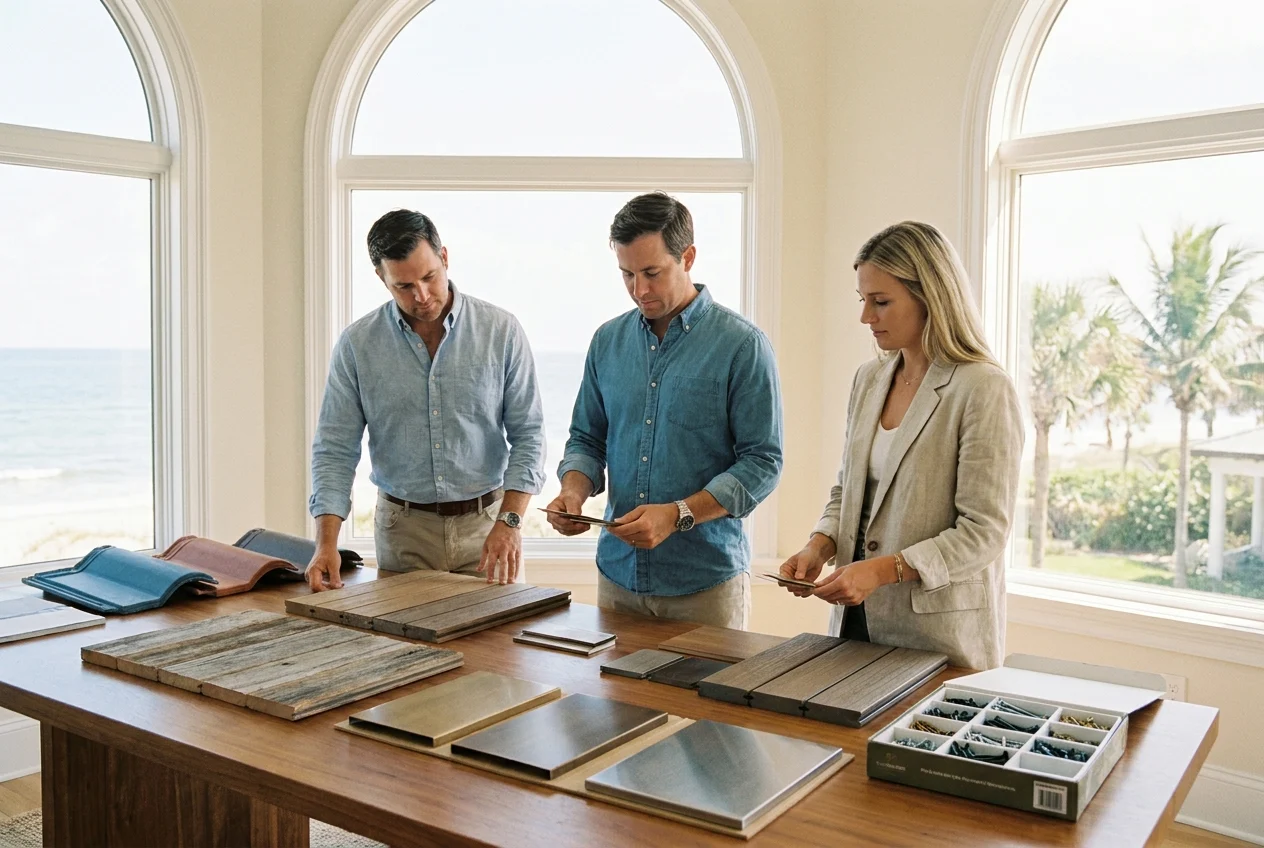
Building or renovating a luxury island home in Florida requires more than selecting finishes that look beautiful on move-in day. Coastal properties face salt air, high humidity, intense sun, wind-driven rain, tropical storms, and strict building requirements, all of which can shorten the lifespan of materials that perform well in less demanding environments.
For homeowners, architects, and builders, material selection is one of the most important decisions in protecting long-term value. The right choices can reduce maintenance, improve resilience, support energy efficiency, and help preserve the refined look expected in a high-end coastal residence.
Understanding the Coastal Forces That Affect Material Performance
Florida’s island communities expose homes to a combination of environmental stressors that work together over time. Salt carried through the air can settle on exterior surfaces, corrode metal components, and accelerate deterioration around fasteners, railings, hardware, and structural connections. Even materials that appear durable at first can begin to fail if they are not designed or treated for marine conditions.
Humidity is another major concern, especially in homes near the shoreline or surrounded by lush tropical landscaping. Moisture can contribute to swelling, warping, mildew, rot, and finish failure when materials are poorly specified or improperly installed. In high-end homes, this can affect everything from exterior cladding and soffits to cabinetry, flooring, trim, and specialty architectural details.
Sun exposure also plays a significant role in coastal construction. Florida’s ultraviolet intensity can fade finishes, weaken some plastics and sealants, and cause surface cracking in materials that are not UV stable. When combined with heat, salt, and moisture, sunlight can dramatically reduce the service life of low-quality exterior products.
Wind and storm exposure must also guide material decisions. Island homes often need to meet elevated wind-load standards, and assemblies must be considered as complete systems rather than individual products. Roofing, windows, doors, cladding, waterproofing, and structural connections all need to work together to resist storm impacts and limit water intrusion.

Exterior Materials That Balance Luxury, Strength, and Longevity
The exterior envelope is the first line of defense for any coastal home. In luxury island construction, it must provide durability without compromising architectural style. Materials should be selected for proven resistance to salt, moisture, wind, and UV exposure, while also fitting the design language of the property.
Fiber cement siding, high-performance stucco systems, natural stone, porcelain panels, and properly specified concrete products are often considered for coastal exteriors because they can offer strong resistance to weathering when installed correctly. Each option has different maintenance needs, design possibilities, and installation requirements, so the best choice depends on the home’s location, exposure level, and architectural goals.
Roofing and Water Management
Roofing choices are especially important in Florida’s coastal climate because the roof must withstand sun, salt, heavy rain, and high winds. Concrete tile, clay tile, standing seam metal roofing, and high-quality synthetic options may all be appropriate in certain luxury applications, provided they meet local code requirements and are installed with compatible underlayment, flashing, and fastening systems.
Water management should be planned with the same level of care as the visible roofing material. Gutters, scuppers, drainage planes, sealants, and flashing details help direct water away from vulnerable areas. In coastal homes, small weaknesses in these systems can lead to expensive damage, especially when wind-driven rain pushes moisture into joints and transitions.
Windows, Doors, and Coastal Openings
Impact-rated windows and doors are essential for many island homes in Florida, not only for storm protection but also for daily performance in a harsh marine environment. Frames, glazing systems, seals, and hardware should be selected for corrosion resistance, air infiltration control, and long-term operation in humid, salty conditions.
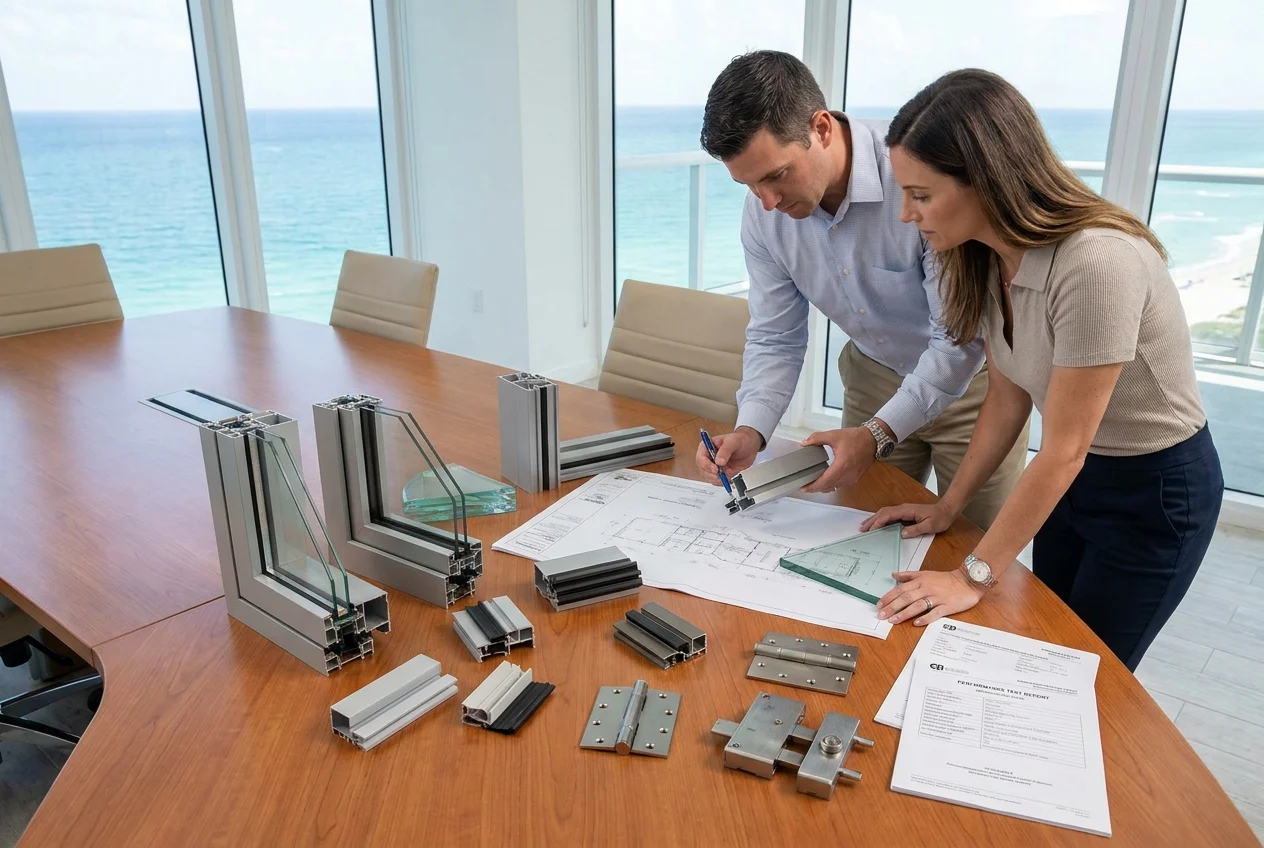
Large glass openings are common in high-end coastal homes because they capture views and create a strong indoor-outdoor connection. These features require careful specification to balance aesthetics, structural performance, energy efficiency, and water resistance. Proper installation is just as important as product selection, since even premium windows and doors can underperform if flashing and sealing details are overlooked.
Choosing Metals and Hardware for Salt Air Exposure
Metal selection is one of the most critical details in a coastal home because corrosion often begins in small, overlooked components. Fasteners, hinges, railings, brackets, clips, anchors, door hardware, cabinet pulls, exterior light fixtures, and mechanical supports can all be vulnerable to salt air. When these parts fail, they can stain surrounding finishes, weaken assemblies, or create maintenance problems that are difficult to correct after construction is complete.
Stainless steel is frequently used in coastal environments, but the grade matters. Marine-grade stainless steel, such as 316 stainless, generally offers better corrosion resistance than more common grades in salt-exposed settings. Aluminum can also perform well when properly coated or anodized, especially for window frames, railings, screens, and shade structures. However, dissimilar metals should be carefully managed because galvanic corrosion can occur when incompatible metals are placed in contact with each other in a moist, salty environment.
Powder-coated finishes, fluoropolymer coatings, and high-quality protective treatments can extend the life of metal components, but they must be appropriate for coastal use. Scratches, field cuts, and exposed edges can become weak points, so installers should follow manufacturer requirements for touch-up procedures and compatible fasteners. In luxury homes, these hidden specifications are just as important as the visible finish color.
Railings, Gates, and Exterior Fixtures
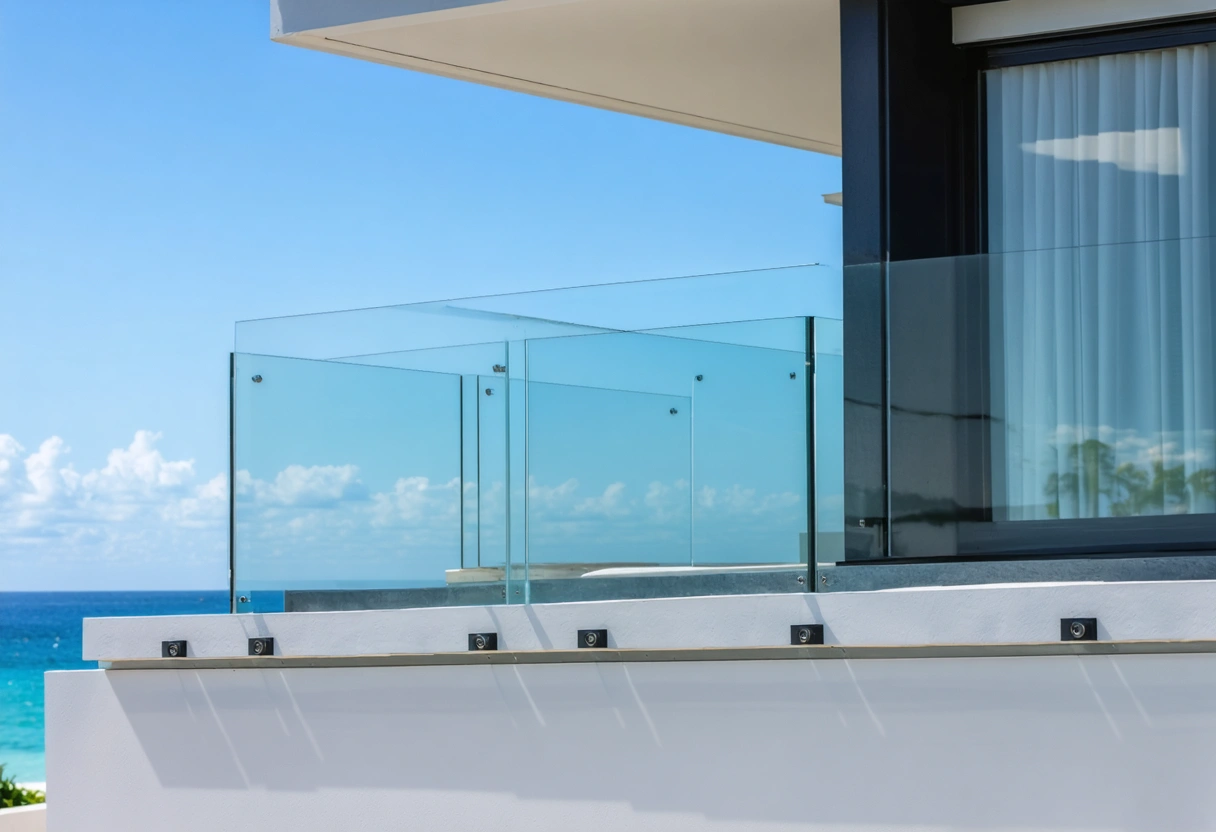
Balcony railings, stair railings, driveway gates, and exterior fixtures experience constant exposure to sun, salt, and wind. These elements should be selected as complete systems with corrosion-resistant posts, anchors, welds, caps, and connectors. Glass railing systems, for example, may provide uninterrupted views, but they still depend on high-performance metal channels, clamps, and fasteners that can tolerate marine conditions.
Exterior light fixtures should also be rated for wet or coastal environments. Decorative fixtures made from low-quality metals may look appropriate during installation but can pit, discolor, or seize quickly. For high-end properties, choosing fixtures with durable housings, sealed electrical components, and replaceable parts helps preserve both safety and appearance.
Interior Materials That Resist Humidity and Daily Coastal Living
Although the exterior of an island home receives the most direct exposure, interior materials must also be selected with Florida’s humidity in mind. Moisture can enter through open doors, covered outdoor living areas, garages, pool spaces, and mechanical systems. In homes used seasonally, humidity fluctuations may be even more pronounced if air conditioning and dehumidification are not consistently managed.
Flooring is a major consideration. Porcelain tile, natural stone, engineered wood designed for humid climates, and high-quality luxury vinyl products may all be suitable depending on the room and design intent. Solid hardwood can be beautiful, but it requires careful consideration in coastal homes because wide humidity swings may contribute to cupping, gaps, or movement. If wood flooring is desired, proper acclimation, subfloor preparation, moisture testing, and climate control are essential.
Cabinetry and millwork also require attention. Marine-grade plywood, moisture-resistant substrates, durable veneers, and high-quality finishes can help cabinetry perform better in kitchens, baths, laundry rooms, bars, and pool-adjacent areas. Standard particleboard or poorly sealed materials may deteriorate quickly when exposed to humidity or minor leaks. In luxury construction, concealed material choices behind cabinet doors and decorative panels can determine how well the interiors age.
Bathrooms, Spas, and Wet Areas
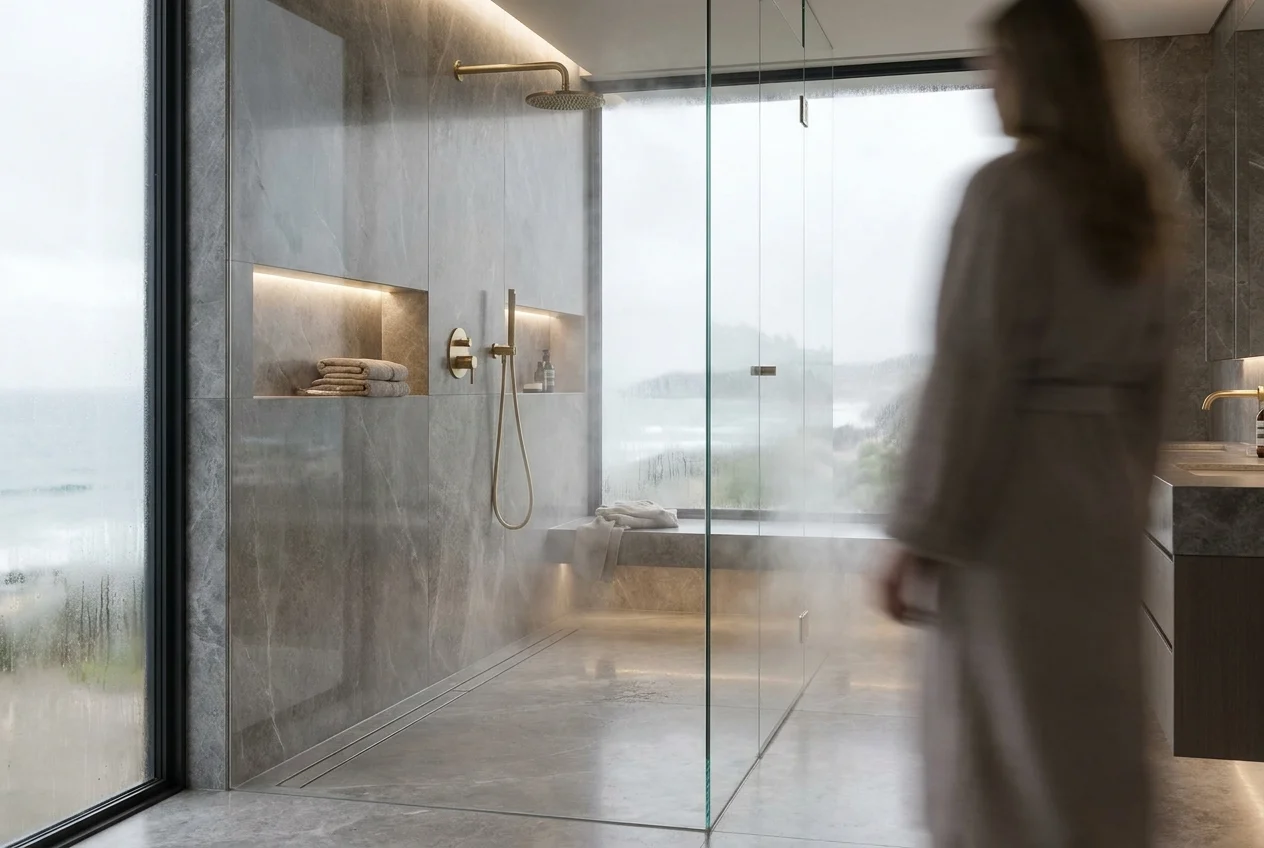
Bathrooms, steam showers, indoor spas, and pool baths require especially robust material assemblies. Stone, tile, grout, waterproofing membranes, backer boards, drains, and ventilation all need to work together to control moisture. A beautiful shower finish will not perform well if the waterproofing system behind it is incomplete or incompatible with the selected materials.
Natural stone can create an elegant coastal look, but some stones are porous and require sealing or specialized maintenance. Porcelain slabs and large-format porcelain tile are popular alternatives because they can provide a refined appearance with lower absorption and easier upkeep. Grout selection is also important, with high-performance grout options offering improved resistance to staining, moisture, and mildew compared with basic cementitious products.
Decking, Outdoor Living Areas, and Poolside Surfaces
Outdoor living spaces are central to the appeal of a high-end island home, but they are also among the most demanding areas for material performance.
Porcelain pavers, natural stone, concrete pavers, composite decking, modified wood, and properly treated hardwoods are common options for coastal outdoor areas. Each has advantages and tradeoffs.
Poolside surfaces deserve special attention because they are exposed to chlorinated or saltwater pool systems in addition to the coastal environment. Some materials may become slippery, hot, stained, or etched if they are not selected for this application.
Outdoor Kitchens and Cabinetry
Outdoor kitchens in coastal homes should be built with materials that can tolerate humidity, salt, grease, heat, and cleaning chemicals. Stainless steel cabinetry, powder-coated aluminum systems, masonry bases, dense porcelain countertops, and properly sealed stone can all be considered depending on the design.
Countertop materials should be chosen for heat resistance, stain resistance, UV stability, and ease of maintenance. Some indoor countertop materials may fade or weaken outdoors, even in covered spaces.
Insulation, Ventilation, and Moisture Control Behind the Finishes
Durability in a coastal home is not only about visible surfaces. The assemblies behind walls, ceilings, roofs, and floors are equally important. Proper insulation, vapor control, air sealing, drainage, and ventilation help prevent condensation, mold growth, and hidden deterioration.
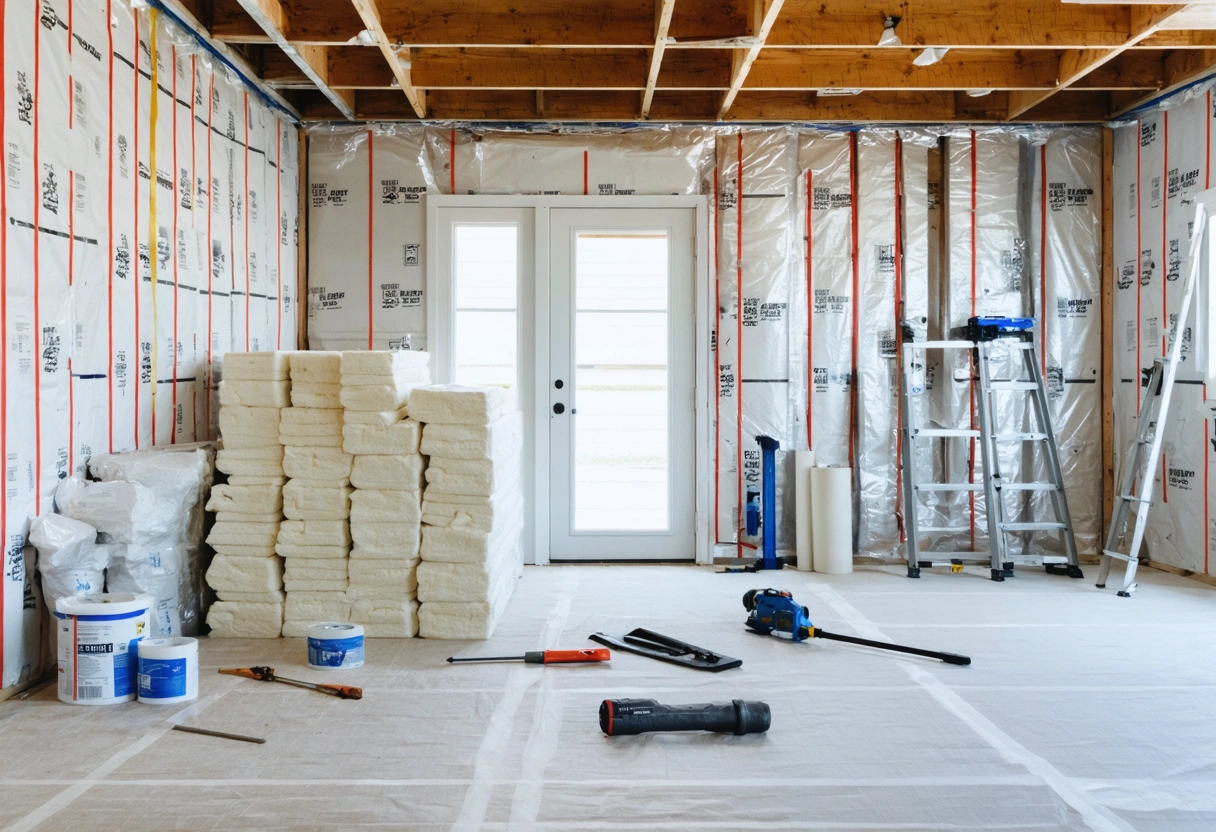
Air infiltration can bring warm, moist outdoor air into cooled interior spaces, where condensation may form on surfaces or inside wall cavities. High-performance windows and doors, sealed penetrations, carefully detailed building wraps, and continuous air barriers help reduce this risk.
Attics, crawl spaces, and enclosed lower levels require careful planning in island environments. Depending on the home’s design and code requirements, conditioned attic assemblies, closed-cell spray foam, elevated floor systems, flood-resistant materials, and dehumidification strategies may be appropriate.
Flood-Resistant Material Planning
Many Florida island homes must account for flood zones, base flood elevations, and storm surge risk. In areas below required elevation levels or in spaces designed for limited use, materials should be selected with flood recovery in mind.
Homeowners should also consider how utilities, storage, garage areas, and ground-level enclosures are designed. Mechanical equipment, electrical components, and valuable finishes should be elevated or protected according to applicable requirements.
Openings, breakaway walls, vents, and access panels should be coordinated with floodplain requirements and material selections so that water can move as intended without causing unnecessary structural damage.
Need help with Choosing Durable Materials for High-End Island Homes in Florida’s Coastal Climate?